
When head and neck cancer returns after previous surgery or radiation, standard treatments are no longer enough. Dr. Manish Tiwari provides highly specialized salvage surgery and access to global Phase III clinical trials to fight recurrent disease.
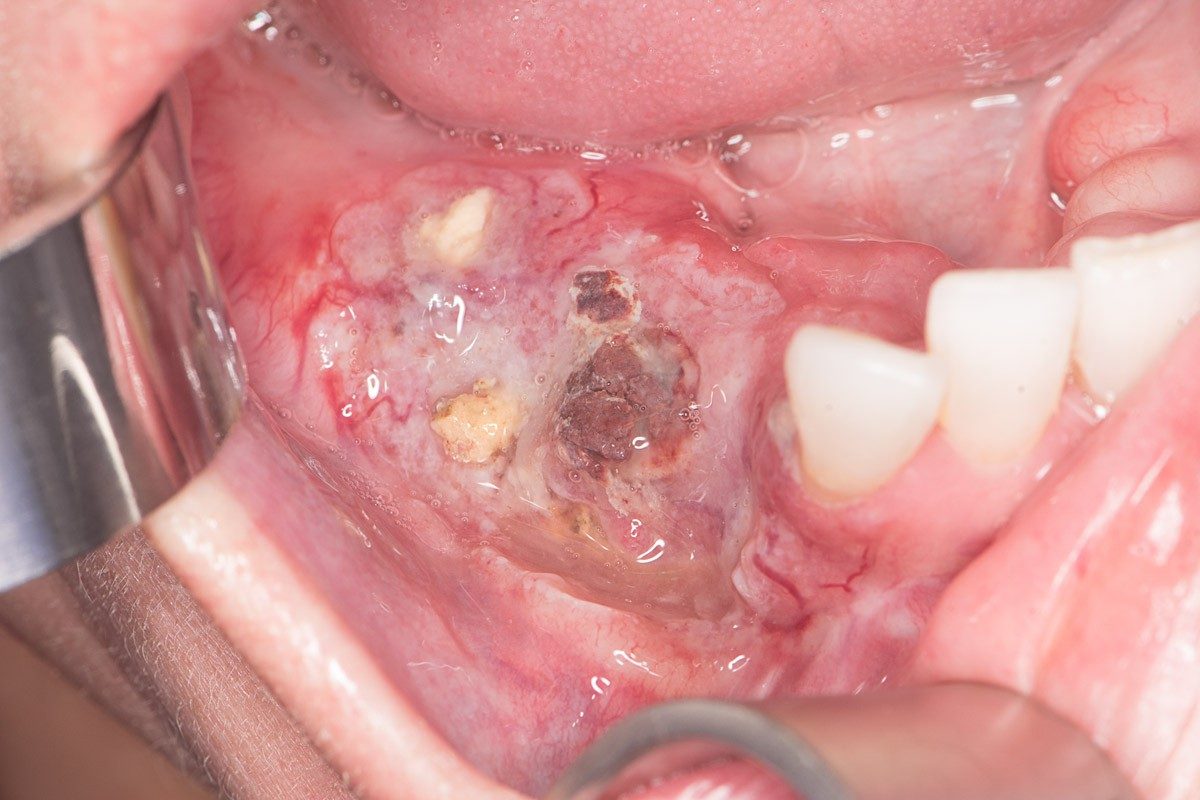
A new lump appearing near the previous surgical scar or in the neck lymph nodes.
Ulcers or sores that break open in areas previously treated with radiation.
A sudden onset of deep pain, difficulty swallowing, or ear pain months after recovery.
Unexplained bleeding from the mouth, throat, or previous surgical sites.
Operating on a tumor that has returned is drastically different from a first-time surgery. The anatomy is distorted by previous procedures, and radiation leaves tissues scarred with a poor blood supply. It requires elite oncological and plastic surgery mastery.
When cancer returns in a previously radiated field, conservative margins are not an option. Dr. Tiwari performs radical excisions to completely clear the compromised tissue beds, navigating safely through dense scar tissue.
Radiated tissues heal poorly. Rebuilding the face after salvage surgery requires importing healthy, well-vascularized tissue from other parts of the body (like the thigh or arm) to ensure the wound heals properly.
For patients where traditional salvage surgery is highly morbid or unfeasible, Dr. Tiwari is a lead investigator utilizing cutting-edge ASP-1929 Photoimmunotherapy (PIT) targeted specifically at recurrent Head/Neck cancers.
A highly calculated approach is taken to ensure safety and maximize the chances of a secondary cure.
We use advanced PET-CT scans and deep biopsies to precisely map the recurrent tumor and rule out radiation-induced necrosis (dead tissue mimicking cancer).
Surgical excision of the recurrent mass, often requiring the removal of previously transplanted flaps or irradiated bone.
Immediately transplanting healthy, vascularized free flaps to safely close the massive defect, prevent infection, and restore function.
After heavy radiation, bone and tissue can die (Osteoradionecrosis), creating ulcers that look exactly like returning cancer. Accurate differentiation is critical.
Salvage surgery is aggressive. Our goal is to cure the disease while supporting your physical and emotional recovery.