
Stop oral cancer before it starts. Photodynamic Therapy is an advanced, non-invasive treatment that uses a light-activated drug to selectively destroy pre-cancerous lesions (like Leukoplakia) without the need for scalpels, stitches, or tissue removal.
Stubborn, thick white patches inside the mouth or on the tongue that cannot be rubbed off.
Bright red, velvety patches in the oral cavity. These carry a very high risk of turning into cancer.
Cells that look highly abnormal under a microscope but have not yet invaded deep tissue.
The earliest form of cancer ("Stage 0"), where abnormal cells are confined to the absolute top layer of tissue.
Traditionally, pre-cancerous patches had to be surgically cut or burned out, leaving painful ulcers and permanent scars. PDT offers a highly targeted, tissue-preserving alternative that destroys the bad cells while leaving the good cells intact.
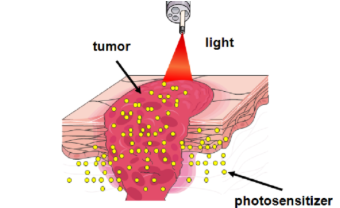
The core of PDT is a "photosensitizer" drug. Because abnormal, pre-cancerous cells grow faster than normal cells, they absorb and hold onto this drug much longer. When we shine a specific laser on the area, only the cells holding the drug are destroyed.
Because PDT does not involve removing chunks of tissue, there is virtually no scarring. The mouth heals cleanly, preserving normal speech and swallowing mechanics, which is especially important for lesions on the vocal cords or tongue.
Unlike radiation therapy, which can only be given a certain number of times in a patient's life, Photodynamic Therapy has no cumulative toxicity. If a patient develops new pre-cancerous patches years later, PDT can safely be performed again.
PDT is usually performed as an outpatient procedure. It is a precise sequence of drug application followed by precise light activation.
A light-sensitive drug (like ALA or Photofrin) is applied directly to the lesion as a gel, or administered intravenously, depending on the depth of the pre-cancer.
A waiting period occurs (from a few hours to a couple of days). During this time, normal cells flush the drug out, but the rapidly dividing abnormal cells trap the drug inside.
Dr. Tiwari uses a specialized, non-heating laser wand to shine light directly onto the lesion. The light reacts with the trapped drug, creating a type of oxygen that instantly kills the abnormal cells.
PDT is highly effective, but it is strictly for *superficial* (surface-level) issues. It cannot treat deep, invasive cancers.
The treated area will react like a localized sunburn as the bad cells slough off.