
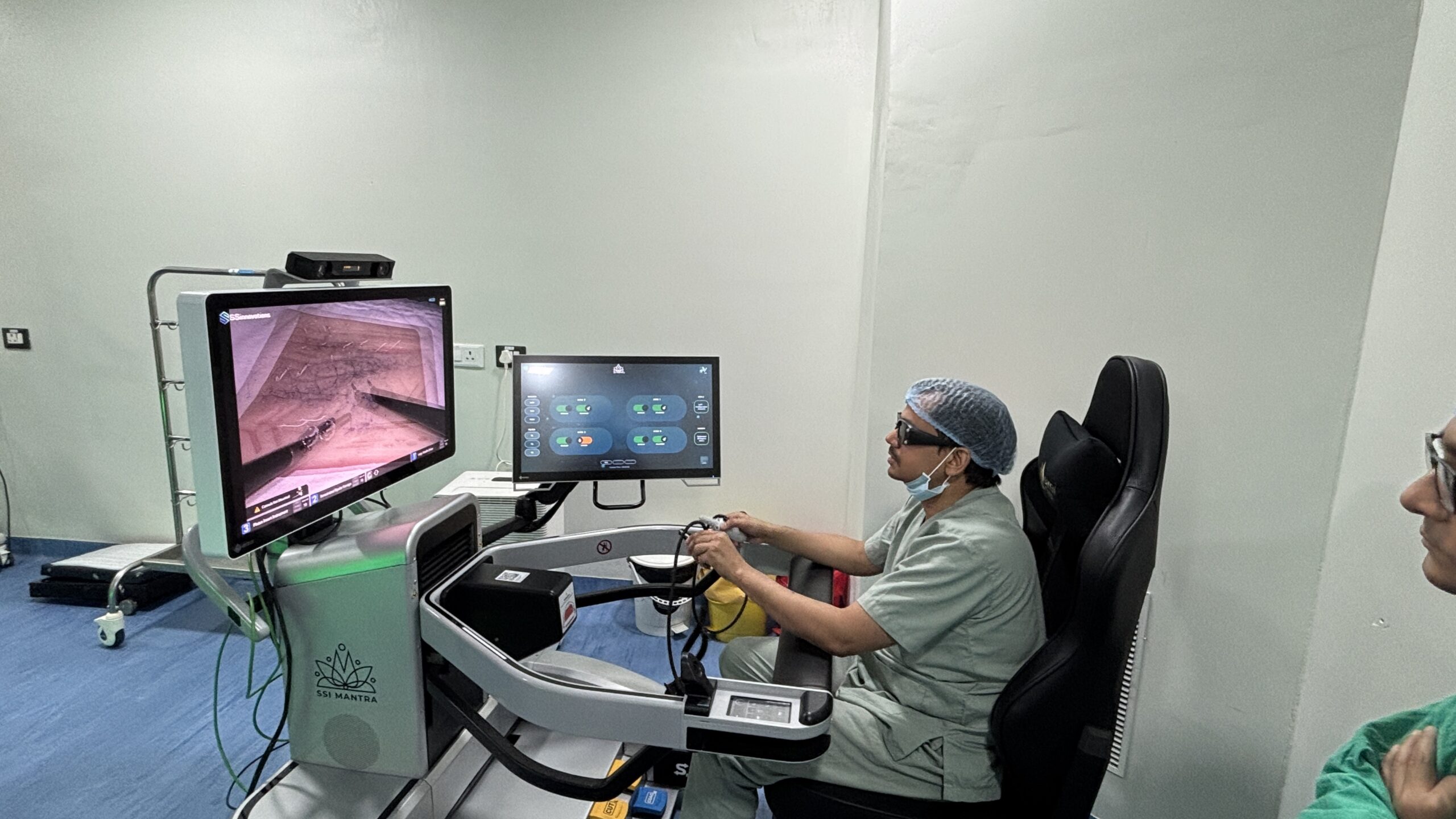
Transoral Robotic Surgery (TORS) allows Dr. Manish Tiwari to remove hard-to-reach tumors in the throat, tonsils, and base of the tongue entirely through the mouth—without external neck incisions or splitting the jaw.
Asymmetric enlargement or persistent pain in one tonsil that does not respond to antibiotics.
A feeling of a lump deep in the throat, often accompanied by bleeding or pain.
Progressive difficulty or sharp pain when swallowing solid foods or liquids.
A "muffled" or hoarse voice that persists for weeks without a cold or infection.
Historically, reaching tumors in the oropharynx (throat) required splitting the lower jaw and lip, resulting in long recoveries and visible scars. TORS revolutionizes this approach.
The entire surgical procedure is performed through the patient’s open mouth (Transoral). There are zero incisions made on the face, jaw, or neck to access the primary tumor.
The robotic arms provide Dr. Tiwari with 3D, high-definition magnification and 360-degree wristed articulation, allowing for extreme precision in tight, deep anatomical spaces.
Because the jaw and external throat structures are left intact, patients experience a significantly shorter hospital stay and return to normal swallowing and speech much faster.
Not all tumors qualify for robotic surgery. Dr. Tiwari strictly evaluates each case to ensure TORS offers the highest oncological safety.
Advanced MRI and CT mapping are used to ensure the tumor is accessible via the mouth and has not invaded deeply into critical carotid vessels.
Using the Da Vinci or Hugo robotic system, the tumor is excised with highly precise laser or cautery instruments, guided by 3D optics.
If the cancer has spread to the lymph nodes, a minimally invasive neck dissection is performed simultaneously to ensure complete clearance.
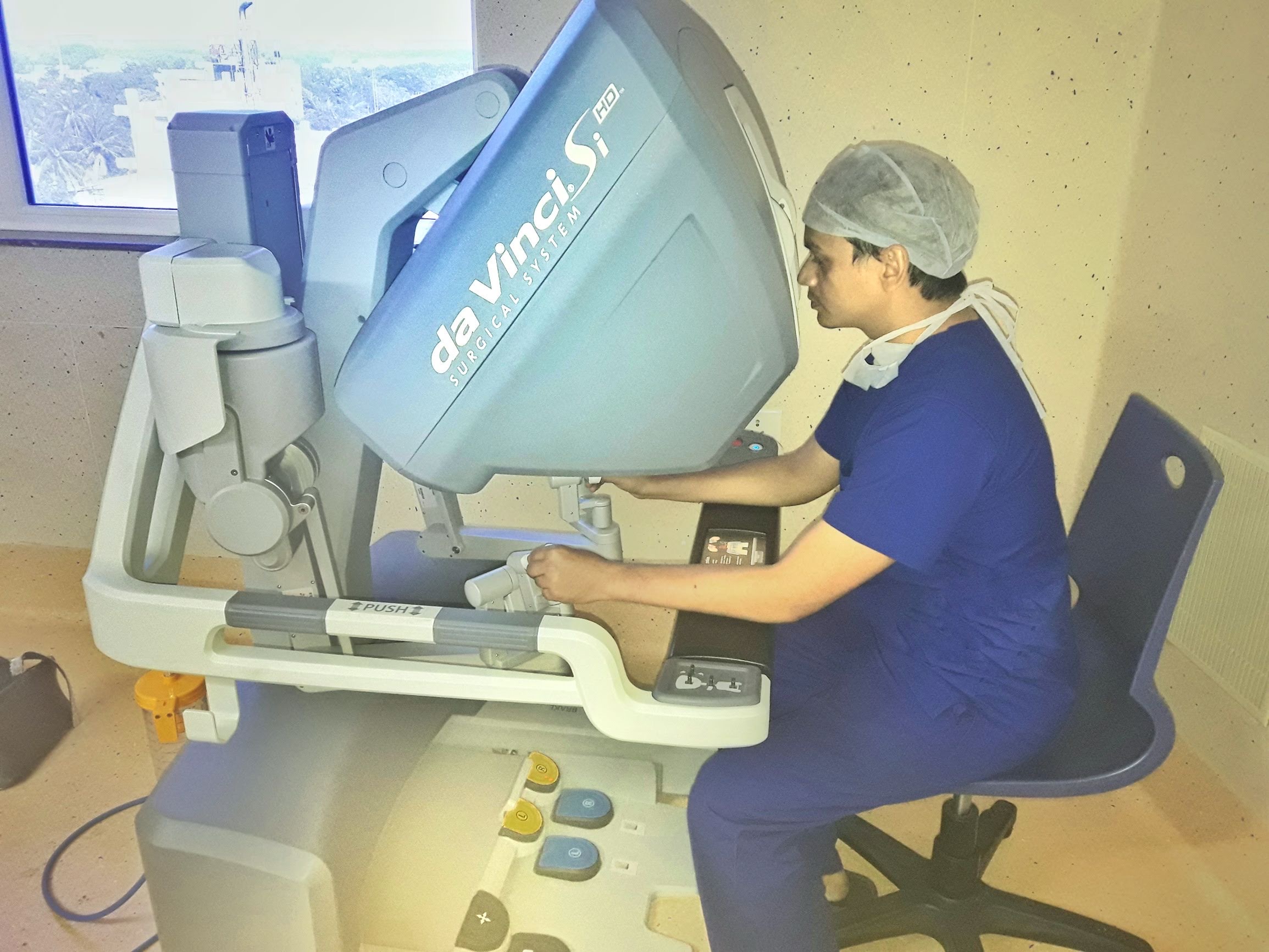
Robotic surgery is primarily utilized for early to moderate stage cancers (T1-T3) located in the Oropharynx.
The primary benefit of TORS is the rapid return to daily life compared to traditional open surgeries.